
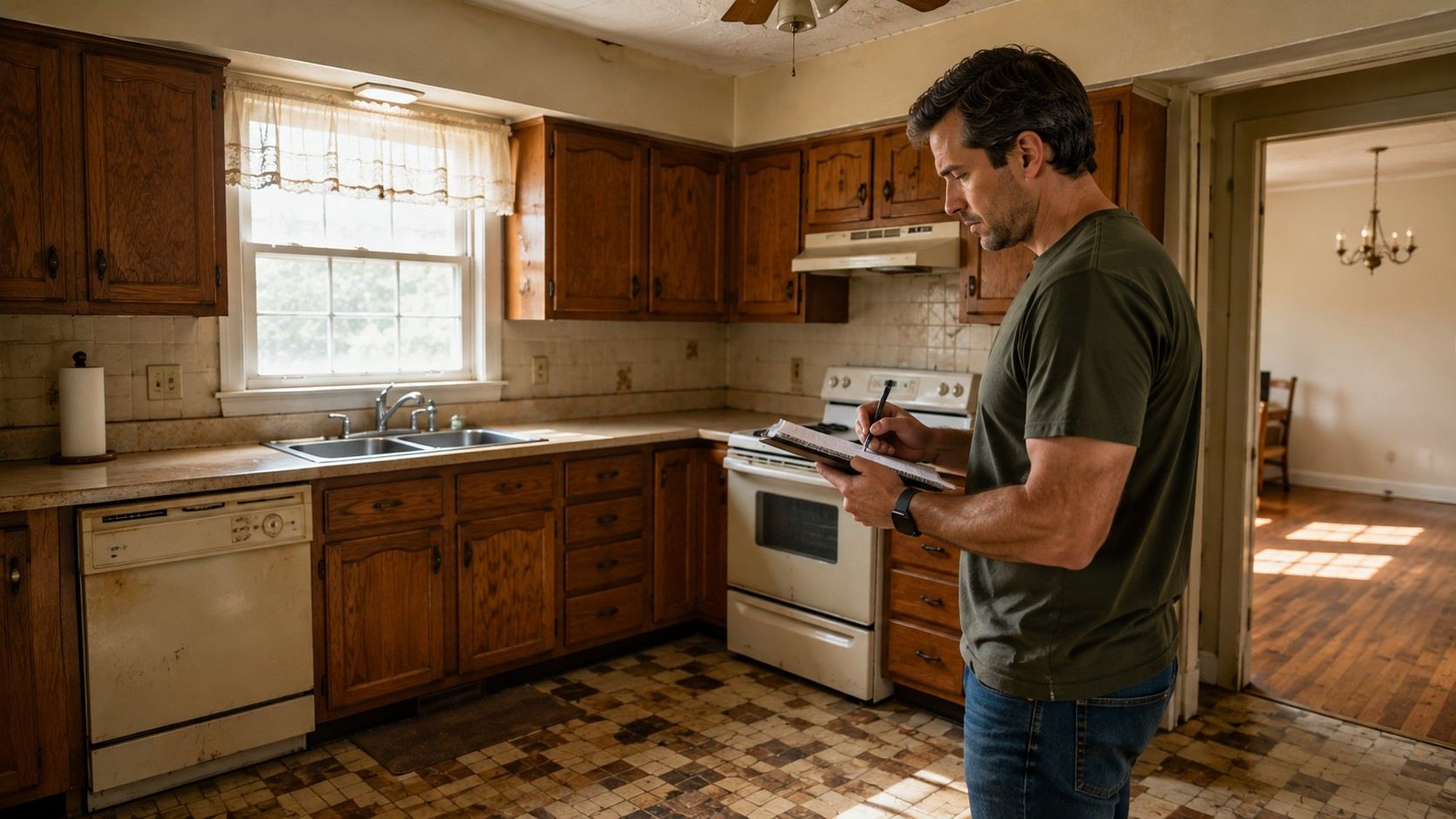
Deciding whether to make repairs before selling a property to a real estate investor can be difficult. Owners may see an aging roof, worn flooring, dated finishes, plumbing concerns, or deferred maintenance and assume everything must be fixed before a buyer will consider the property. Others may consider a major renovation in hopes of receiving a stronger offer.
Neither approach is automatically right. Repairs require money and time, and an improvement that appeals to an owner-occupant may not have the same value to a long-term investor. Before starting work, it helps to understand how condition affects an investor’s evaluation and what owners should compare when deciding whether to repair, renovate, or sell in the property’s current condition.
Do You Have to Make Repairs Before Speaking With an Investor?
Not necessarily. A property does not have to be freshly renovated before an owner begins a conversation with a real estate investor. Investors can evaluate properties with different maintenance and improvement needs, although each buyer has its own investment strategy.
Owners unfamiliar with this type of transaction may benefit from understanding what to expect when selling a property to a real estate investor before deciding how much work to complete.
Speaking with a prospective buyer before committing to major improvements can help an owner avoid assumptions about what that buyer values. An investor may consider condition together with location, occupancy, potential income, operating expenses, comparable properties, and anticipated ownership needs.
How Property Condition Fits Into an Investor’s Evaluation
Condition matters because repairs and future maintenance can affect ownership costs. However, investors generally evaluate more than appearance alone. A dated kitchen and an aging roof, for example, represent different considerations. Cosmetic finishes may affect presentation, while major building components can create larger future expenses.
An investor may consider the roof, heating and cooling equipment, plumbing, electrical components, windows, exterior, interior finishes, and general maintenance. An older component does not necessarily require immediate replacement. Its present condition, expected useful life, and the investor’s plans can all matter.
For a broader explanation, owners can review how real estate investors evaluate a property. Repair needs are generally considered alongside other physical, financial, and market information rather than in isolation.
Repairs and Renovations Are Different Decisions
It is useful to separate necessary maintenance from optional renovation. Repairing an active leak is different from replacing functional cabinets because their style is dated. Addressing a problem that could worsen is also different from remodeling an entire room mainly for appearance.
Renovations can involve contractors, materials, permits in some situations, scheduling, unexpected costs, and delays. Even when improvements make a property more attractive, owners should not assume that every dollar spent will create an equal or greater increase in an investor’s offer.
A long-term investor may also have its own plans for the property. Improvements selected by the seller may not match the buyer’s intended materials, budget, timing, or ownership strategy. This is one reason to compare the likely benefit of a project with its total cost and effort before proceeding.
When Might Completing a Repair Make Sense?
There are circumstances in which addressing a problem before a sale may be reasonable. The decision depends on the property, the issue, the owner’s resources, and the selling strategy.
- Preventing additional damage: A manageable problem may become more expensive if it continues to deteriorate.
- Maintaining basic functionality: Certain repairs may help keep the property usable and protected during the selling process.
- Addressing a straightforward issue: A small, clearly defined repair may be worthwhile when its cost and scope are manageable.
- Supporting another selling strategy: Owners planning to market broadly to owner-occupant buyers may decide that certain preparation serves that strategy.
The goal is not to create a universal repair checklist. It is to distinguish work that serves a practical purpose from improvements being completed only because an owner assumes an investor expects them.
When Might Selling Without Major Repairs Make Sense?
Some properties would require substantial work to reach a fully renovated condition. An owner may also lack the time, funds, or desire to coordinate contractors before exploring a sale. This can be especially relevant for inherited homes, distant properties, rentals, or properties with accumulated deferred maintenance.
In those situations, allowing a prospective investor to evaluate the existing condition may provide another option to compare. This relates closely to selling a property as-is, which generally involves offering a property in its current condition rather than agreeing in advance to complete repairs simply to prepare it for a buyer.
However, selling as-is does not automatically eliminate inspections, due diligence, disclosures, or other obligations. Those details depend on the purchase agreement and applicable requirements. Owners should understand the actual terms rather than treating “as-is” as a promise that condition will no longer matter.
Consider More Than the Contractor’s Estimate
When comparing repairing with selling in the current condition, the quoted cost of construction is only part of the decision. Preparation can also involve time, carrying costs, and uncertainty.
Consider how long the work may take and what expenses continue during that period. Property taxes, insurance, utilities, association obligations, lawn care, security, loan payments when applicable, and routine maintenance may continue while improvements are underway.
Projects can also reveal additional problems, exceed an initial budget, or take longer than expected. That does not mean owners should avoid repairs. It means the decision should account for the realistic commitment rather than focusing only on the first estimate.
Be Careful About Renovating Solely to Increase an Offer
It is understandable to want to improve a property before asking a buyer to evaluate it. However, undertaking a major renovation solely because an owner expects an investor’s offer to rise by more than the project’s cost can introduce uncertainty.
Investors may have different repair costs, standards, plans, and assumptions. They may also consider factors that a cosmetic renovation cannot change, including location, rental performance, operating expenses, comparable properties, and future maintenance needs.
If the goal is broad exposure to owner-occupant buyers, presentation may play a different role. If the owner is specifically considering a direct investor sale, gathering information about that option before committing to extensive improvements can make the comparison more informed.
Questions to Ask Before Spending Money on Repairs
Before beginning work, owners can consider several practical questions:
- Is this a necessary repair or primarily a cosmetic improvement?
- Could delaying the repair allow additional damage?
- What is the realistic total cost, including unexpected work?
- How long is the project likely to take?
- What ownership expenses continue during the work?
- Am I making this improvement for a specific selling strategy?
- Have I compared selling in the current condition with repairing first?
Answering these questions can help owners decide whether a project supports their goals rather than assuming a property must look newly renovated before an investor will consider it.
Frequently Asked Questions About Repairs Before an Investor Sale
Will an investor consider a property that needs major repairs?
Potentially. Investors can evaluate properties with different condition profiles, but whether a property fits depends on the buyer’s strategy and overall analysis. Owners should provide accurate information about known issues instead of assuming major repairs automatically prevent consideration.
Should I renovate the kitchen or bathroom first?
Not automatically. Cosmetic renovations can be expensive, and a prospective investor may have different plans. Compare selling strategies and the likely cost and benefit before undertaking a major remodel solely for an investor sale.
Does selling without repairs mean there will be no inspection?
No. Selling in the property’s current condition does not necessarily prevent inspections or other due diligence. The buyer’s rights and the seller’s responsibilities depend on the purchase agreement and applicable requirements.
What if I do not know how much repairs will cost?
You do not necessarily need a complete renovation budget before speaking with an investor. Be transparent about known issues. If repair costs are important to your own decision, appropriate estimates can help you compare alternatives more realistically.
Make the Repair Decision Based on Your Selling Strategy
There is no universal list of improvements every owner should complete before selling to an investor. A repair that prevents additional damage may be worthwhile, while an expensive renovation may make less sense when a prospective buyer intends to make its own improvements.
Compare the property’s current condition, likely repair costs, time, ongoing ownership expenses, and available selling options. Looking at those factors together can help owners decide whether completing work before a sale supports their circumstances and goals.
Considering Selling Before Making Major Repairs?
Stonewalker Properties focuses on residential investment opportunities across Florida, Georgia, Alabama, Ohio, and Indiana with a disciplined, long-term ownership mindset. If you are deciding whether to repair a property before exploring a sale, you can contact Stonewalker Properties to discuss the property in its current condition. An initial conversation can help determine whether further evaluation makes sense before you decide how much work, if any, you want to undertake.